Lent it from library, where i got a ton of knowledge..
This story, chaotic and desperate but tinged with glamour all the same, appears about two-thirds of the way through Roland Philipps’s brilliantly fluent retelling of the life of Donald Maclean, surely the most quietly productive of the Cambridge spies, and perhaps the strangest – and it stands, here, for many others like it. Maclean had a self-destructive streak as wide as the Volga, and his benders were both legendary and highly alarming to those who witnessed them (though on occasion the only onlooker was equally inebriated: he and his friend, the writer Philip Toynbee, once consumed six bottles of Gordon’s between them in the course of a single day).
But it also talks powerfully to the central mystery of Maclean’s career. He was an extremely good spy, passing many thousands of classified documents to the Russians from his recruitment in 1934 to 1951, when he was finally unmasked. That he evaded detection for so long is less surprising when you consider that the British authorities refused to listen to warnings from the US, even after the FBI had established that an agent code-named Homer had been operating inside the British embassy in Washington during the war.
What is truly amazing, though, is the way Maclean’s personality was split three ways: the almost pedantically efficient diplomat whom his colleagues liked and trusted; the energetic spy whose politics would never waver, not even after the Soviets’ brutal crushing of the Hungarian uprising in 1956; the miserable soak whose drinking provided his sole escape valve. How is it that the last Maclean never brought down his two other selves? And what are we to make of his loathing for the work of a spy, even as he was determined to do it? Ideology and distaste for the job were always at war inside him; it was, he said, “like being a lavatory attendant – it stinks but someone has to do it”.
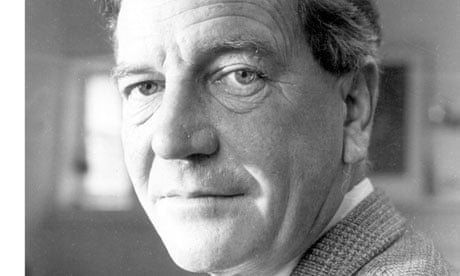
We expect spies to be lonely, isolated. What we do not expect, perhaps, is that they should worry about grubbiness; that their job and their conscience should sometimes fall on different sides (his colleagues Guy Burgess and Kim Philby were, as Philipps notes, entirely without this kind of morality). Philipps is ever attentive to such things, and it is they who make his book so fascinating – far more so, I think, than all the unlikely meetings in Leicester
What is truly amazing, though, is the way Maclean’s personality was split three ways: the almost pedantically efficient diplomat whom his colleagues liked and trusted; the energetic spy whose politics would never waver, not even after the Soviets’ brutal crushing of the Hungarian uprising in 1956; the miserable soak whose drinking provided his sole escape valve. How is it that the last Maclean never brought down his two other selves? And what are we to make of his loathing for the work of a spy, even as he was determined to do it? Ideology and distaste for the job were always at war inside him; it was, he said, “like being a lavatory attendant – it stinks but someone has to do it”.
We expect spies to be lonely, isolated. What we do not expect, perhaps, is that they should worry about grubbiness; that their job and their conscience should sometimes fall on different sides (his colleagues Guy Burgess and Kim Philby were, as Philipps notes, entirely without this kind of morality). Philipps is ever attentive to such things, and it is they who make his book so fascinating – far more so, I think, than all the unlikely meetings in Leicester Square with handlers carefully carrying copies of novels by AJ Cronin.
Maclean, the son of a Liberal politician whose devout nonconformism could be traced back to Tiree in the Inner Hebrides, attended Gresham’s school in Norfolk, an establishment whose insidious disciplinary code was described by another old boy, WH Auden, as an engine for turning boys into “remote introverts”. In 1931, he went to Cambridge University, which was where he became a communist (Philipps suggests that his conversion may have been, at least in part, an antidote to the blackly depressing times). Recruited as a spy by Arnold Deutsch, the Austrian (or possibly Hungarian) academic who also signed up Kim Philby, he knuckled down to the diplomatic service exams only because this would make him useful (Maclean really wanted to be a teacher). Once inside the Foreign Office – his first codename was “Orphan” – he was soon handing over so many documents at a time, Deutsch was compelled to ask him to slow down; he needed a breather, even if Maclean didn’t. Such activity continued – it seems almost to have been a kind of mania – in Paris and Washington, the cities to which he was first posted, and where he had a ringside seat for, among other things, the carving up of Europe by the allies and the work of the combined policy committee on atomic energy.
Philipps, a distinguished former publisher but a first-time author, sometimes indulges in a little too much noisy foreshadowing of what lies ahead, a technique that betrays a wholly unnecessary nervousness with his material. But this is a small thing. He writes so cleanly, and at such a clip, handling the big scenes with aplomb – particularly the dramatic and oddly poignant days before and after the defection of Burgess and Maclean on the latter’s 38th birthday in 1951, a move made all too easy by the complacency of MI5. But there is something even better here, in the form of the melancholy thread that is Maclean’s singular, flexible and, at times, deeply loving marriage. This runs through his book, like gold. Philipps never loses sight of the mother of Maclean’s three children, and all the various roles she plays. (How much did she know? A very great deal – and yet, in another way perhaps, nothing at all.) Harder to read even than her husband, she was just as capable of grand betrayal (once she had joined her husband behind the iron curtain, she ran off with Kim Philby). In the end, it’s thanks to her that this biography first grips and then lingers long in the mind. It is a page-turner of the most empathetic kind.

No comments:
Post a Comment